Question
Start with one clear claim or problem worth examining.
Evidence & context
Short, source-conscious examinations of useful evidence, emerging ideas, and claims that deserve a closer look. The goal is to distinguish what is known, what is suggested, and what remains uncertain.
Editorial standard
Research Notes are not designed to make weak evidence sound exciting. Scientific, legal, market, and behavioral claims should be separated from interpretation and opinion. Where evidence is early, mixed, indirect, or incomplete, the language should say so.
Method
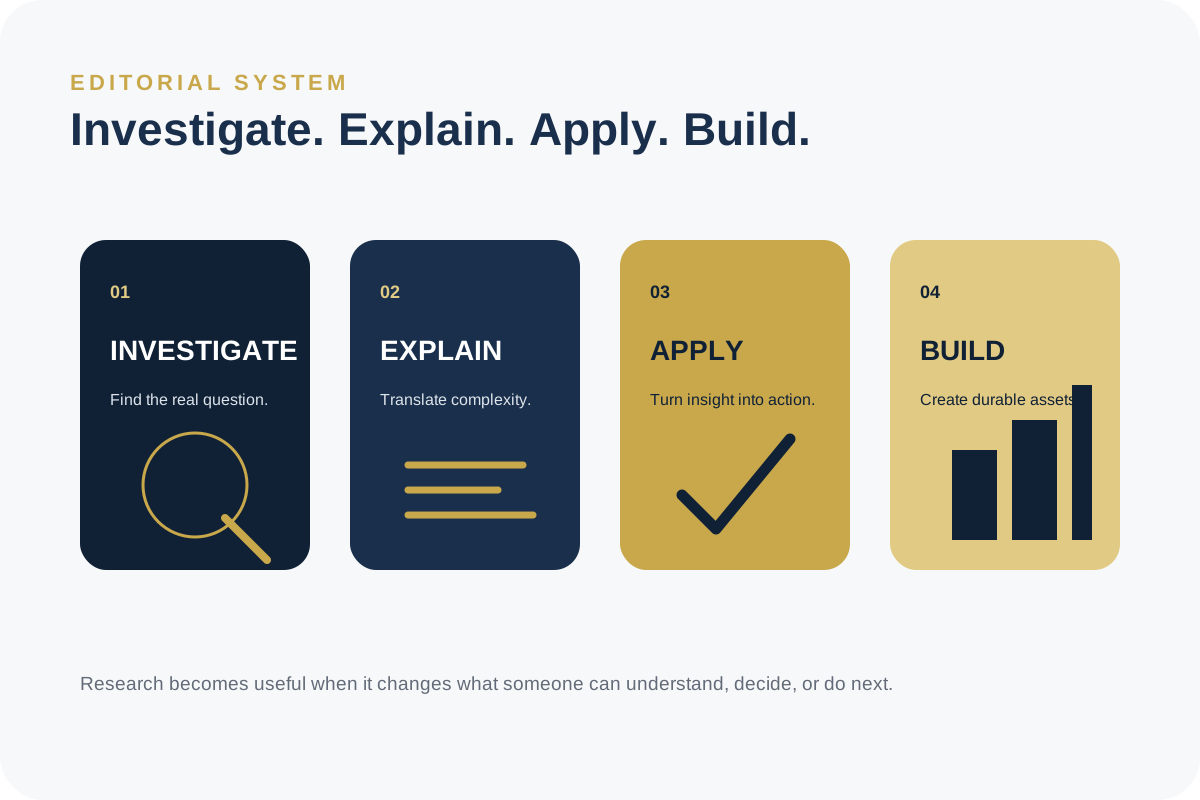
Start with one clear claim or problem worth examining.
Prioritize primary, authoritative, and directly relevant sources.
Identify uncertainty, missing context, and competing explanations.
Explain what the evidence reasonably changes for a brand, founder, or audience.
Current research queue
A source map for examining expertise, transparency, specificity, incentives, corroboration, and the difference between confidence and certainty.
A practical look at the line between preserving nuance and making an audience work unnecessarily hard to understand the point.
A framework for separating established evidence, promising signals, early findings, interpretation, and marketing claims.
Research integrity
“Interesting” is not the same as “established.”
Research Notes are designed to preserve that distinction. When a finding is preliminary, narrow, conflicting, or based on indirect evidence, the communication should make those limits visible rather than hide them behind confident language.
Start a conversation
Use a discovery call to talk through the problem, the audience, what already exists, and where the most leverage actually is.